
Building the Next Blueprint for Resilience
The following article is featured in the Fall 2026 issue of Cybersecurity Quarterly. To read the rest of this quarter's content, click below.
view the full issue hereBy Randy Rose
In August 2026, the Multi-State Information Sharing and Analysis Center (MS-ISAC) hosted a webinar on a pattern that had been building quietly for years.
A Wake-Up Call for Critical Infrastructure
Cyber incidents targeting water and wastewater utilities across multiple states had reached a threshold that demanded a direct conversation. Attackers gained access to and disrupted internet-facing operational technology (OT) systems—devices that monitor and control safe delivery of clean water and removal of wastewater—forcing utility personnel to fall back on manual operations. In multiple cases, the intrusions were discovered not through a security alert, but through operational impact.
More than 2,000 people showed up to participate in that conversation. The session brought together experts from the EPA, the FBI, WaterISAC, OT-CERT (Dragos), the Center for Internet Security (CIS), Skagit Public Utility District in Washington, and the State of Minnesota. Despite being one of several organizations holding calls, that kind of attendance reflected something interesting: widespread attacks on critical infrastructure had reached a tipping point and people across every sector needed a place to think through it together.
The lessons from those incidents are worth carrying forward, because they apply well beyond water infrastructure.
When Technology Outpaces Governance
IT and OT networks converged long ago, and our adversaries know this. Cyber resilience and operational resilience are no longer separable. Technology decisions have operational consequences, and in the public sector those consequences can impact entire communities. A pressure loss at a water plant disrupts hospitals, schools, and homes long before it shows up in an incident report.
The security community has understood this about critical infrastructure for years. A more difficult question to answer is whether we are applying that same thinking to emerging technology before the incidents arrive. Technology can become deeply embedded in critical operations long before organizations have the governance and visibility needed to manage the risk. The recent incidents targeting the water sector reminded us that by the time an incident occurs, the technology has often become essential to daily operations.
Artificial Intelligence (AI) is presenting a similar challenge today. It is already inside most organizations, whether it arrived through a formal process, a shadow IT decision, a vendor enhancement, or a browser extension nobody approved. Leaders are being asked to adopt AI, defend against AI-enabled threats, and govern the whole thing simultaneously, frequently without the resources, expertise, or framework to do any of it well. That is the same convergence pressure water utilities were under when Internet connectivity expanded faster than security controls could keep pace. There are parallels in structure, regulation, and adoption. We must not let there be a parallel in speed of response, too, otherwise we will be decades behind the problem.
On the bright side, what makes the current AI situation more manageable is the same thing that made the water webinar useful: no organization is navigating this alone, and the experiences of those who are further along belong to the whole community
Turning Shared Intelligence Into Shared Guidance
The MS-ISAC has been tracking AI-enabled threats targeting state, local, tribal, and territorial (SLTT) governments and translating those observations into actionable intelligence and guidance. While we’re not yet approaching the point where attackers are running full-scale, autonomous, and agentic AI attacks, threat actors are using AI to improve the speed, scale, and sophistication of their attacks. Defenders can use it to detect patterns faster and prioritize more effectively. Neither attackers nor defenders have a permanent advantage, which means the organizations that build deliberate capability now will be better positioned when the threat landscape shifts again.
Governance becomes increasingly critical in a rapidly changing technology environment. Decisions about AI deployment affect cybersecurity, privacy, accountability, access control, data bias, public trust, and more. Without a governance structure, even well-intentioned AI adoption creates a new risk surface. CIS and the MS-ISAC released AI Playbooks for SLTT Cybersecurity Leaders earlier this year to address exactly this gap, covering readiness, governance, risk review, and procurement in a framework aligned to the NIST AI Risk Management Framework and NIST Cybersecurity Framework 2.0. A podcast series followed to help members work through the material, and a workshop series launched in September to bring member practitioners into the conversation directly, because governance frameworks are most useful when they are tested against real environments with real problems to be solved.
Learning Through Real-World Experience
The same reasoning drove the launch of the SLTT AI Cyber Defense Pilot in partnership with OpenAI. The goal is to generate practical lessons learned from real AI deployments, in real government environments, shared across the broader community. Following the initial announcement of the pilot, Brian Calkin, CIS Chief Technology and Innovation Officer, said, "At a time when defenders at the state and local government level are challenged by a growing threat landscape, AI has the potential to be a game changer. This pilot will help us understand how AI can help organizations make smarter decisions, respond faster, and focus on the risks that matter most. The lessons we learn can help strengthen cyber resilience for communities across the country."
That last sentence is the point. Too often the lesson we learn is that we’re not learning lessons. This pilot is specifically designed to ensure the right lessons are being captured by the communities involved, not just the organizations running the pilot.
The Power of Collective Defense
The communities most at risk tend to be the ones with the fewest resources to navigate this on their own. A rural water utility or a county sheriff's office do not have the same capacity as a large state agency or a federal department. That has always been true of cybersecurity, and it is equally true of AI governance. The MS-ISAC exists in part to make sure that gap does not predetermine outcomes.
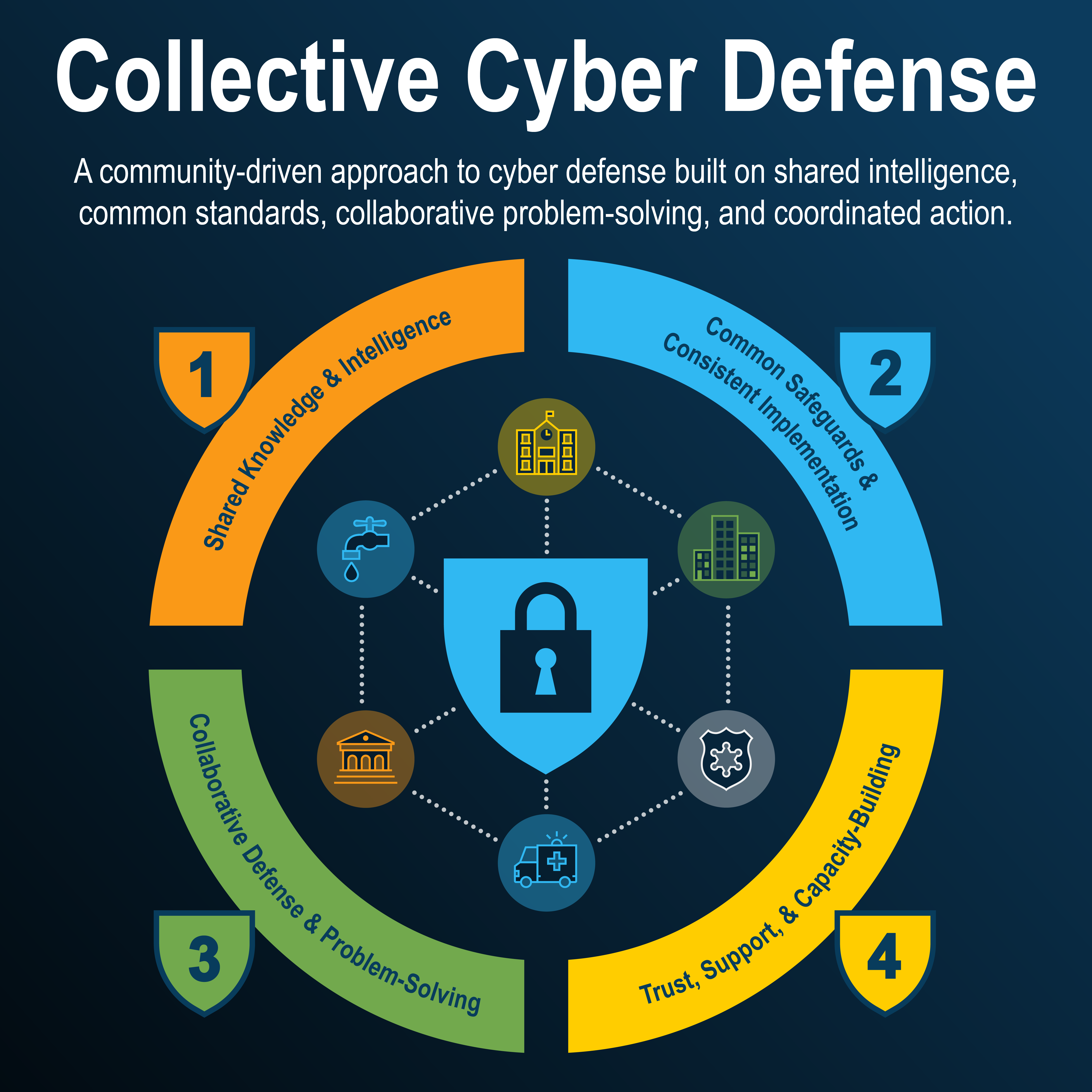
When one MS-ISAC member discovers a means to deploy AI responsibly, every other member in the community should be able to learn from that experience. That is collective defense, and it is how hard problems get solved.
About the Author
Randy Rose
Vice President of Security Operations & Intelligence
Randy Rose has 22+ years of experience across local, state, and federal government. He leads Security Operations & Intelligence at the Center for Internet Security (CIS). He oversees the execution of CIS's Security Operations Center, Cyber Threat Intelligence, Cyber Incident Response, and Cyber Red Team missions. Previously, he led the largest Joint DoD Security Operations Center in Europe and headed the Intelligence Department for the Navy's Defensive Cyber Operations Task Force. After serving as an active duty airman in the US Air Force, he became New York State’s first local government-focused penetration tester. With an academic foundation in anthropology, political science, and cybersecurity, Rose focuses on the human side of security, strategic partnerships, and leadership that empowers.
As of June 23, 2025, the MS-ISAC has introduced a fee-based membership. Any potential reference to no-cost MS-ISAC services no longer applies.