
Cyber Hygiene Basics: What Two UK Stories Teach Us
Most cyber incidents start with a device nobody tracked, a password nobody changed, or a service nobody needed. Following essential cyber hygiene closes those openings, and it reduces risk from old tactics and new AI-powered ones.
For most, knowing what to do has never been the hard part. Doing it consistently, across every system, every week, is. The right tools change that. Automated assessments, ready-made configuration changes, and ongoing progress tracking turn establishing essential cyber hygiene from a one-time project into a repeatable process. Two UK stories show why that matters.
Two UK Cyber Stories, One Lesson: Master the Basics
On November 3, two UK cybersecurity stories broke reporting attackers had hit UK meat-processing firms by targeting refrigeration systems, and the National Cyber Security Centre (NCSC) used its Annual Review to warn about AI-powered attacks.
One story describes an old problem and the other a new one. However, they both point to the same conclusion: strong fundamentals decide who stays protected.
When Legacy Equipment Meets Default Passwords
Reports on earlier incidents in France say attackers got in through legacy equipment that was connected to the internet and still used default passwords. Whether the UK cases followed the same path is not yet clear, but the weaknesses are common ones and each maps to a specific CIS Safeguard in the CIS Critical Security Controls® (CIS Controls®) v8.1.
1. Inventory what is connected
Legacy devices tend to drop out of view, which is why Safeguard 1.1, Establish and Maintain Detailed Enterprise Asset Inventory, calls for an accurate, current inventory of every asset that can store or process data. Safeguard 1.2, Address Unauthorized Assets, calls for a weekly process to remove, block, or quarantine anything that shouldn’t be there. If a refrigeration controller isn’t on the list, no one is responsible for securing it.
2. Remove default and shared logins
Safeguard 4.7, Manage Default Accounts on Enterprise Assets and Software, covers the root, administrator, and other pre-configured vendor accounts that ship with a device. Safeguard 5.2, Use Unique Passwords, requires unique passwords for all enterprise accounts.
3. Turn off services not needed
Safeguard 4.8, Uninstall or Disable Unnecessary Services on Enterprise Assets and Software, calls for turning off services an asset doesn’t need. Fewer running services means fewer ways in.
4. Standardize secure settings

Safeguard 4.1, Establish and Maintain a Secure Configuration Process, ties these together by requiring a documented secure configuration process, so the fixes happen consistently instead of one device at a time. In the CIS Community Defense Model (CDM) v3.0, Safeguard 4.1 ranks first for four of the five most common attack types analyzed.
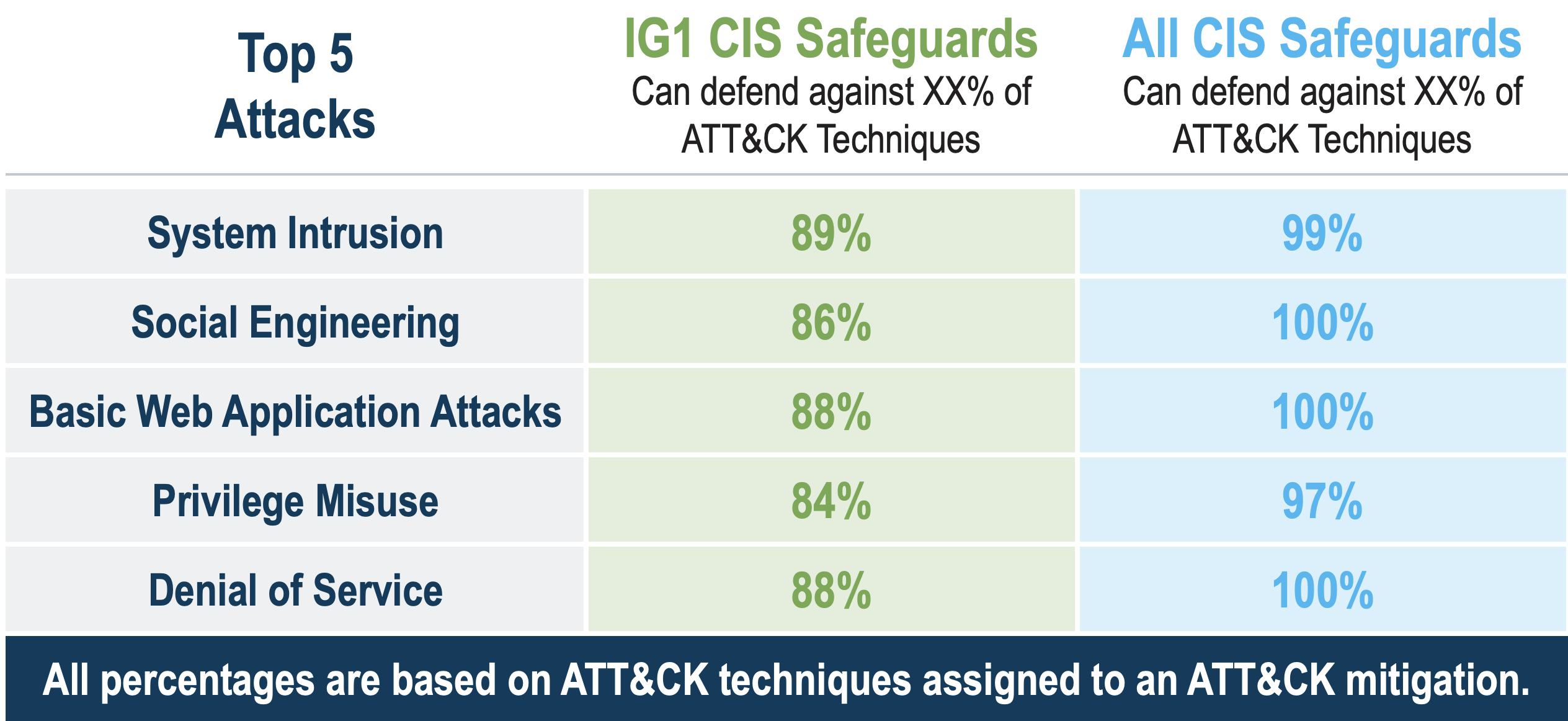
AI changes how fast attackers move. It does not change what they reach for first: assets nobody tracks, passwords nobody changed, and services nobody needed. The NCSC makes the same point in its foreword: AI exposed weaknesses that were already there. Establishing Cyber Hygiene with Security Best Practices
Many UK organizations already have a foundation to build on. The government just opened a 75% discount on new Cyber Essentials certification for eligible micro, small, and medium-sized businesses, with prices starting at £80 plus VAT. It runs until March 2027 or until the funding runs out.
It is a good entry point, and because the CIS Controls map to NCSC Cyber Essentials, work toward one supports the other. The funding covers certification fees. The ongoing work of hardening and monitoring systems is where CIS SecureSuite® Membership comes in.
CIS Benchmarks® cover mainstream platforms such as operating systems, servers, and network devices. While a CIS Benchmark will not harden a refrigeration controller directly, it does harden the systems those controllers connect to. CIS SecureSuite Membership gives teams the tools to make that work repeatable at a pace they can sustain. CIS-CAT® Pro Assessor scans systems against the CIS Benchmarks and shows which settings pass and which fail. CIS Build Kits automate the configuration changes that close the gaps. The CIS SecureSuite Platform then tracks conformance over time, so an auditor, customer, or board member who asks about progress gets an answer backed by data.
From Assessment to a Cybersecurity Roadmap with My Cybersecurity Journey
Once an organization has assessed itself, the next question is always what to do first. A new feature in the CIS SecureSuite® Platform, My Cybersecurity Journey, answers it. It converts a completed CIS Controls assessment into an interactive roadmap and works from existing assessment data, so no extra data entry is needed. The roadmap includes posture scores aligned to the six functions of the NIST Cybersecurity Framework, a prioritized list of actions to close the biggest gaps, and visual reports designed for both technical teams and executive leadership.
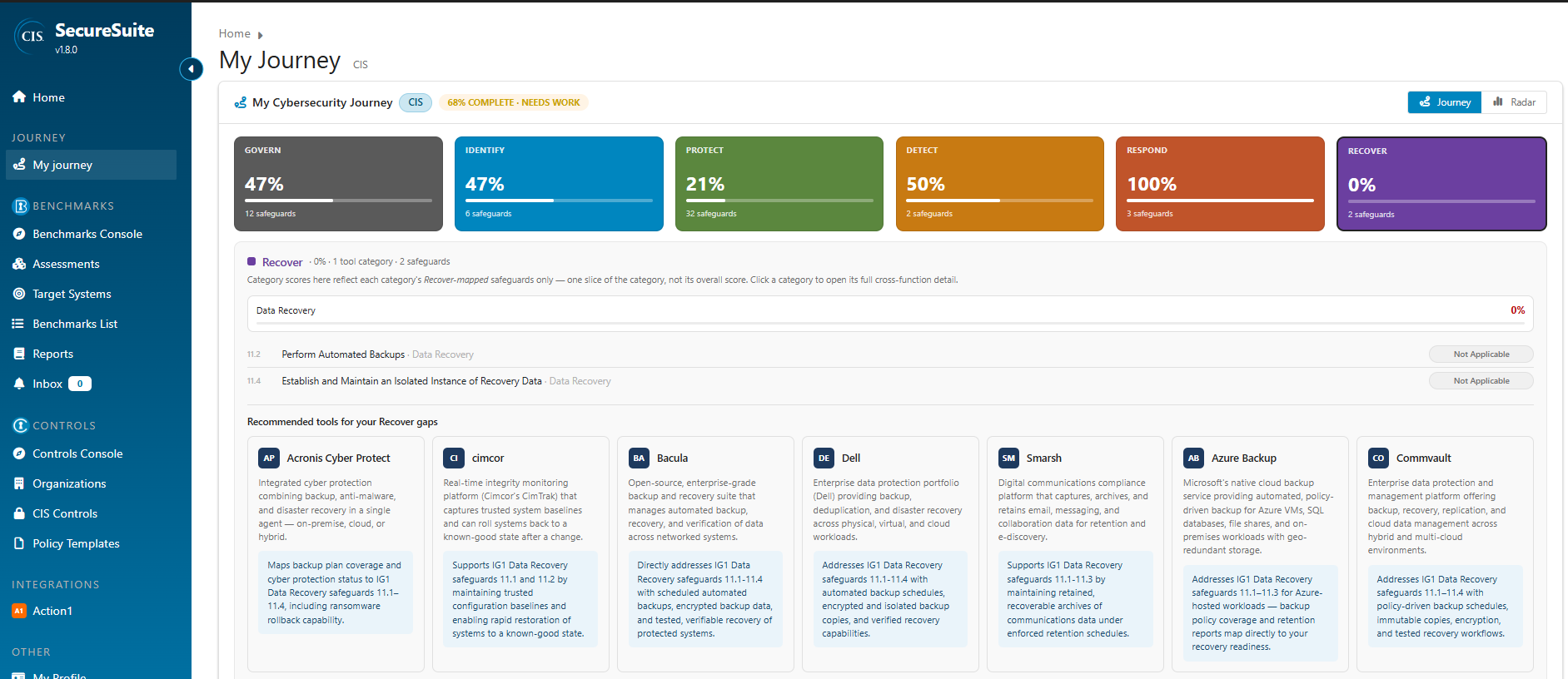
That last piece matters for UK organizations. The government’s Cyber Resilience Pledge asks signatories to treat cyber security as a board-level responsibility, and boards need clear evidence of progress, not a folder of scan results. A roadmap that shows where an organization stands, what to fix next, and how far it has come gives leadership something they can act on.
Where to Start
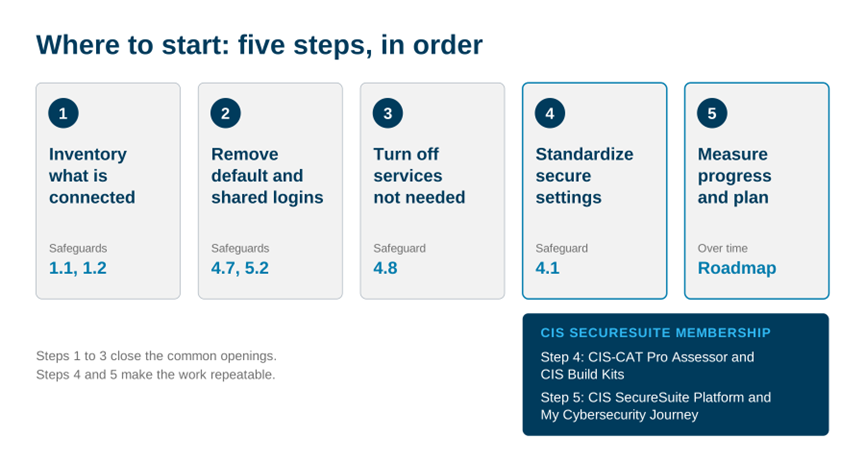
Work through steps one to three, lock them in with step four using CIS-CAT Pro and Build Kits, then measure progress in the CIS SecureSuite Platform, where the roadmap shows what comes next. Attackers will keep getting faster. The organizations that do the basics consistently, and can prove it, will stay ahead.
Want to learn more about AI threats? Watch our on-demand webinar Beyond the AI Hype: A Data-Driven Look at What Actually Protects Your Organization, which includes a live demo of My Cybersecurity Journey.
As of June 23, 2025, the MS-ISAC has introduced a fee-based membership. Any potential reference to no-cost MS-ISAC services no longer applies.